Tattoo Removal
Tattoo removal is a process carried out with a Q-switched Nd:YAG laser that requires multiple sessions depending on the colour and depth of the ink and the type of tattoo. Complete clearance is not achievable for every tattoo.
Book AppointmentAbout the Treatment
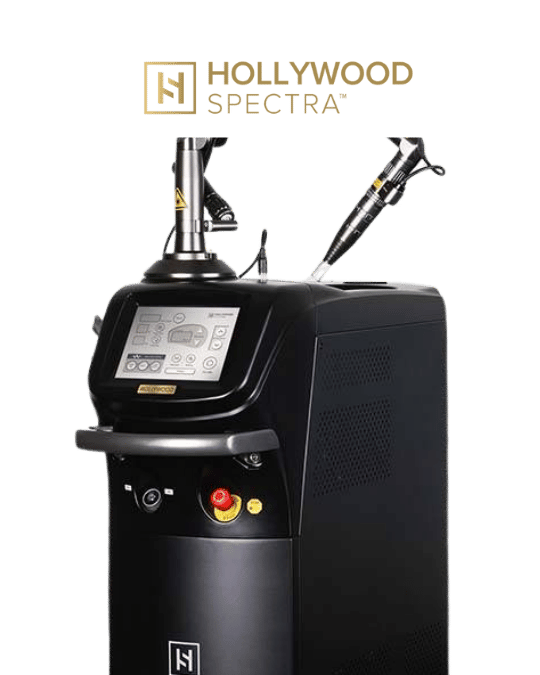
Tattoo removal is performed with the Lutronic Hollywood Spectra Q-switched Nd:YAG laser platform. This laser releases its energy in extremely short pulses lasting nanoseconds. The pulse creates a photoacoustic effect within the ink particles, breaking them into smaller fragments without spreading significant heat into the surrounding tissue; the fragments are then cleared gradually by the immune system over the following weeks. For this reason a tattoo fades not in a single session but across sessions and during the intervals between them.
The colour of the ink largely determines the outcome. The 1064 nm wavelength gives the most effective results on black, dark blue and grey. The 532 nm wavelength is used for red, orange and brown. Colours such as green, light blue, yellow and white respond only partially to these wavelengths, or may not respond at all. Amateur tattoos usually contain less ink and clear in fewer sessions, while professional tattoos require considerably more because the ink is denser and deeper.
An interval of 6 to 8 weeks between sessions is usual, to allow the tissue to heal. The total number of sessions varies with the age, size, depth, colour density and location of the tattoo and with your skin type; some tattoos require a long programme. Complete clearance is not always possible: a faint shadow, a residual colour difference or a slight change in skin texture may remain. Results differ from person to person and cannot be guaranteed in advance.
Treatment is not performed during pregnancy, where there is active infection or an open wound in the area, while taking medication that causes photosensitivity, or if isotretinoin has been used recently. In people with a tendency to keloid scarring, a history of vitiligo, or darker skin types, the risk of lasting loss of pigment and of post-inflammatory darkening is assessed separately. One important caution: iron oxide pigments used in permanent make-up and in some cosmetic tattoos can darken paradoxically when treated with a laser, so a small test area is required in these sites before treatment.
During the session the sensation resembles an elastic band snapping against the skin; topical anaesthetic cream is used where needed. Redness, swelling, whitening and, less often, blistering may follow, after which crusting develops. The crusts should be left to separate on their own, the area kept clean and dry, and sun exposure avoided until healing is complete. How well your tattoo will respond can only be assessed through a physician consultation.
Frequently Asked Questions
The total number of sessions depends on the tattoo's age, size, depth, colour density, location on the body and your skin type. Amateur tattoos usually contain less ink and fade in fewer sessions, while professional tattoos require considerably more. Between sessions, six to eight weeks are usually allowed for the tissue to heal.
Complete removal is not always possible. A faint shadow, a difference in colour or a slight change in skin texture may remain. Outcomes depend on the ink colour, its depth and individual response, and cannot be guaranteed in advance. How far your tattoo will respond to laser can only be judged at a medical examination.
The 1064 nm wavelength works best on black, dark blue and grey tones, while 532 nm is used for red, orange and brown. Colours such as green, light blue, yellow and white respond only partly to these wavelengths, or not at all. In multicoloured tattoos the result can therefore differ from area to area.
Pigments containing iron oxide, used in permanent make-up and some cosmetic tattoos, can paradoxically darken when treated with laser. For this reason a test on a small area is required before treating these sites. The whole area is not treated until the test result has been seen.
During treatment the sensation is similar to a rubber band snapping against the skin. A topical anaesthetic cream is used when needed. How strong it feels varies with the area, the size of the tattoo and individual tolerance.
Afterwards you may see redness, swelling, whitening and, less often, blistering, followed by crusting. The crusts should be left to come off on their own without scratching, the area kept clean and dry, and protected from the sun until healed. Picking the crusts increases the chance of scarring.
Take the first step
Book Your Appointment
Schedule your consultation with our expert team today.
- Certified specialists
- Personalized consultation
- Reply within 1h